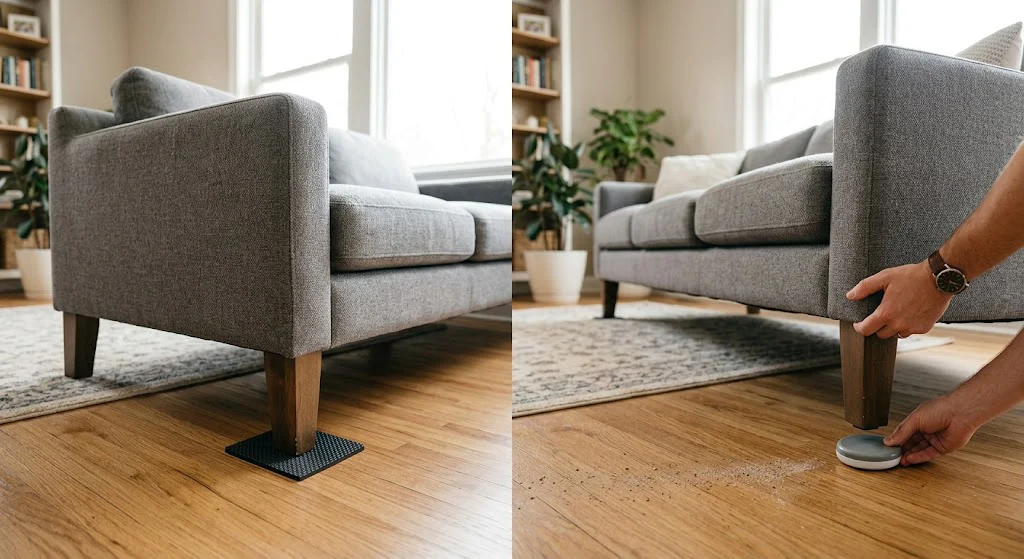
Uneven floors are a common problem in both older and newer homes. A table that rocks, a cabinet that won’t sit flat, or a chair that wobbles every time someone sits down can quickly become frustrating. Many homeowners look for a simple fix and often end up choosing between furniture levelers and felt pads.
Although these accessories are sometimes used together, they serve very different purposes. One is designed to stabilize furniture on uneven surfaces, while the other primarily protects floors from scratches and reduces noise.
So, which solves uneven floors better? In most cases, furniture levelers are the more effective solution because they allow you to adjust the height of individual furniture legs. Felt pads, while useful for floor protection, cannot correct significant height differences.
This guide compares furniture levelers and felt pads, explaining how they work, where each performs best, and how to decide which option is right for your home.
What Are Furniture Levelers?
Furniture levelers are adjustable devices that attach to the bottom of furniture legs. By raising or lowering individual legs, they compensate for uneven floors and help eliminate wobbling.
They are commonly used on:
- Dining tables
- Kitchen tables
- Cabinets
- Bookshelves
- Desks
- Dressers
- Workbenches
- Storage units
Many levelers feature threaded stems that can be turned to make precise height adjustments.
What Are Felt Pads?
Felt pads are soft protective cushions that stick to the bottom of furniture legs.
Their primary purpose is to:
- Prevent floor scratches
- Reduce movement noise
- Allow furniture to slide more easily
- Protect hardwood, laminate, and tile floors
While they provide a small amount of cushioning, they are not designed to level furniture.
Understanding Uneven Floors
Floors can become uneven for many reasons, including:
- Natural settling of the house
- Older construction methods
- Moisture damage
- Foundation movement
- Uneven subfloors
- Changes in humidity
Even a slight difference in floor height can cause furniture to rock.
Choosing the right solution depends on the severity of the unevenness.
Which Option Actually Levels Furniture?
Furniture Levelers
Furniture levelers are specifically designed to solve uneven floor problems.
By adjusting the height of one or more legs, they create a stable, balanced surface.
Many models offer fine adjustments, making it easy to eliminate wobbling completely.
Felt Pads
Felt pads do not provide adjustable height.
Although stacking multiple felt pads may temporarily reduce wobbling, they compress over time and rarely produce a long-lasting fix.
Winner: Furniture levelers.
Floor Protection
Furniture Levelers
Some levelers include plastic or rubber feet that protect flooring.
However, metal levelers without protective caps may scratch delicate surfaces if used improperly.
Felt Pads
Protecting floors is where felt pads truly excel.
They help prevent:
- Scratches
- Scuff marks
- Surface wear
- Noise during furniture movement
They are especially useful on hardwood flooring.
Winner: Felt pads.
Stability
Furniture Levelers
Properly installed levelers significantly improve furniture stability.
This is particularly important for:
- Tall bookshelves
- Cabinets
- Dining tables
- Heavy desks
Stable furniture is also safer because it is less likely to tip or shift unexpectedly.
Felt Pads
Felt pads provide almost no structural stabilization.
If furniture rocks before installation, it will usually continue to rock afterward.
Winner: Furniture levelers.
Ease of Installation
Felt Pads
Installation is extremely simple.
Most felt pads include self-adhesive backing.
The basic process involves:
- Clean the furniture leg.
- Peel off the backing.
- Press the pad firmly into place.
Installation takes only a few minutes.
Furniture Levelers
Installing levelers usually requires:
- Drilling pilot holes (for some models)
- Screwing in threaded inserts
- Adjusting each leg individually
Although still DIY-friendly, installation requires more time and tools.
Winner: Felt pads.
Durability
Furniture Levelers
Quality metal or reinforced plastic levelers can last for many years with minimal maintenance.
Because they are adjustable, they can continue to compensate if floors settle further over time.
Felt Pads
Felt pads gradually wear down due to friction.
Heavy furniture may compress them, requiring periodic replacement.
Winner: Furniture levelers.
Noise Reduction
Furniture Levelers
Some rubber-bottom levelers reduce noise when furniture moves.
However, hard plastic or metal feet may still produce sound on certain flooring types.
Felt Pads
Felt naturally reduces scraping sounds.
Moving chairs across hardwood floors becomes much quieter after installing felt pads.
Winner: Felt pads.
Best Uses for Furniture Levelers
Furniture levelers work particularly well for:
- Wobbly dining tables
- Office desks
- Heavy cabinets
- Garage workbenches
- Shelving units
- Workshop furniture
- Kitchen islands
Anywhere stability is the priority, levelers are usually the better solution.
Best Uses for Felt Pads
Felt pads are ideal for:
- Dining chairs
- Coffee tables
- Side tables
- Sofas
- End tables
- Entertainment centers
They help preserve flooring while allowing furniture to move smoothly.
Can You Use Both Together?
Yes.
In many situations, combining furniture levelers with felt pads provides the best results.
For example:
- Use adjustable levelers to eliminate wobbling.
- Add felt pads to protect hardwood floors and reduce noise.
Many adjustable levelers are also available with built-in felt or rubber bases, offering the benefits of both in one product.
Cost Comparison
Felt Pads
Felt pads are generally inexpensive.
A single package often covers multiple pieces of furniture, making them a budget-friendly option for floor protection.
Furniture Levelers
Levelers cost more because they include adjustable hardware.
However, their longer lifespan and ability to solve stability problems often justify the higher price.
Common Mistakes to Avoid
When using either product, avoid these mistakes:
- Choosing felt pads to fix serious wobbling
- Installing levelers without measuring carefully
- Ignoring weight capacity
- Using low-quality adhesive pads
- Overtightening threaded levelers
- Forgetting to check furniture stability after installation
Selecting the right product for the problem saves time and frustration.
Pros and Cons
Furniture Levelers
Pros
- Correct uneven furniture
- Adjustable height
- Long-lasting
- Improve stability
- Suitable for heavy furniture
- Can compensate for uneven floors
Cons
- More expensive
- Installation takes longer
- Some models require drilling
- Not all include floor protection
Felt Pads
Pros
- Affordable
- Protect flooring
- Reduce noise
- Easy to install
- Easy to replace
- Help furniture slide smoothly
Cons
- Do not truly level furniture
- Wear out over time
- Compress under heavy weight
- May peel off with frequent movement
Tips for Choosing the Right Option
Before making your decision, ask yourself:
- Is the furniture wobbling?
- Do I mainly want to protect the floor?
- Is the furniture heavy?
- Do I move it often?
- What type of flooring do I have?
If stability is your primary concern, choose adjustable furniture levelers.
If your furniture is already stable and you simply want to protect your floors, felt pads are likely all you need.
Frequently Asked Questions
Do felt pads stop furniture from wobbling?
Not usually. While they may slightly reduce minor movement, felt pads compress over time and are not designed to level uneven furniture.
Are furniture levelers difficult to install?
Most adjustable levelers are suitable for DIY installation. Some simply screw into pre-drilled holes, while others use threaded inserts for added strength.
Can I use furniture levelers on hardwood floors?
Yes, but choose models with protective rubber or nylon feet, or place felt pads beneath them to prevent scratches.
How often should felt pads be replaced?
Replacement depends on usage. Pads under frequently moved furniture, such as dining chairs, may need replacing every few months, while those under stationary furniture can last much longer.
Which option is better for uneven tile floors?
Furniture levelers are generally the better choice because they allow precise height adjustments to compensate for uneven tile surfaces.
Final Thoughts
Furniture levelers and felt pads may look similar, but they solve different problems. If your goal is to stop a table, chair, cabinet, or desk from rocking on an uneven floor, furniture levelers are the clear winner. Their adjustable design lets you fine-tune the height of each leg, creating a stable and secure piece of furniture that stays balanced even on slightly uneven surfaces.
Felt pads, on the other hand, are best for protecting floors from scratches, reducing noise, and making furniture easier to move. While they provide a small amount of cushioning, they aren’t a reliable solution for correcting uneven floors because they compress with use.
For many homes, the ideal approach is to use both products together—levelers to stabilize the furniture and felt pads to safeguard your flooring. By understanding the purpose of each, you can choose the right solution and enjoy furniture that is both stable and gentle on your floors for years to come.