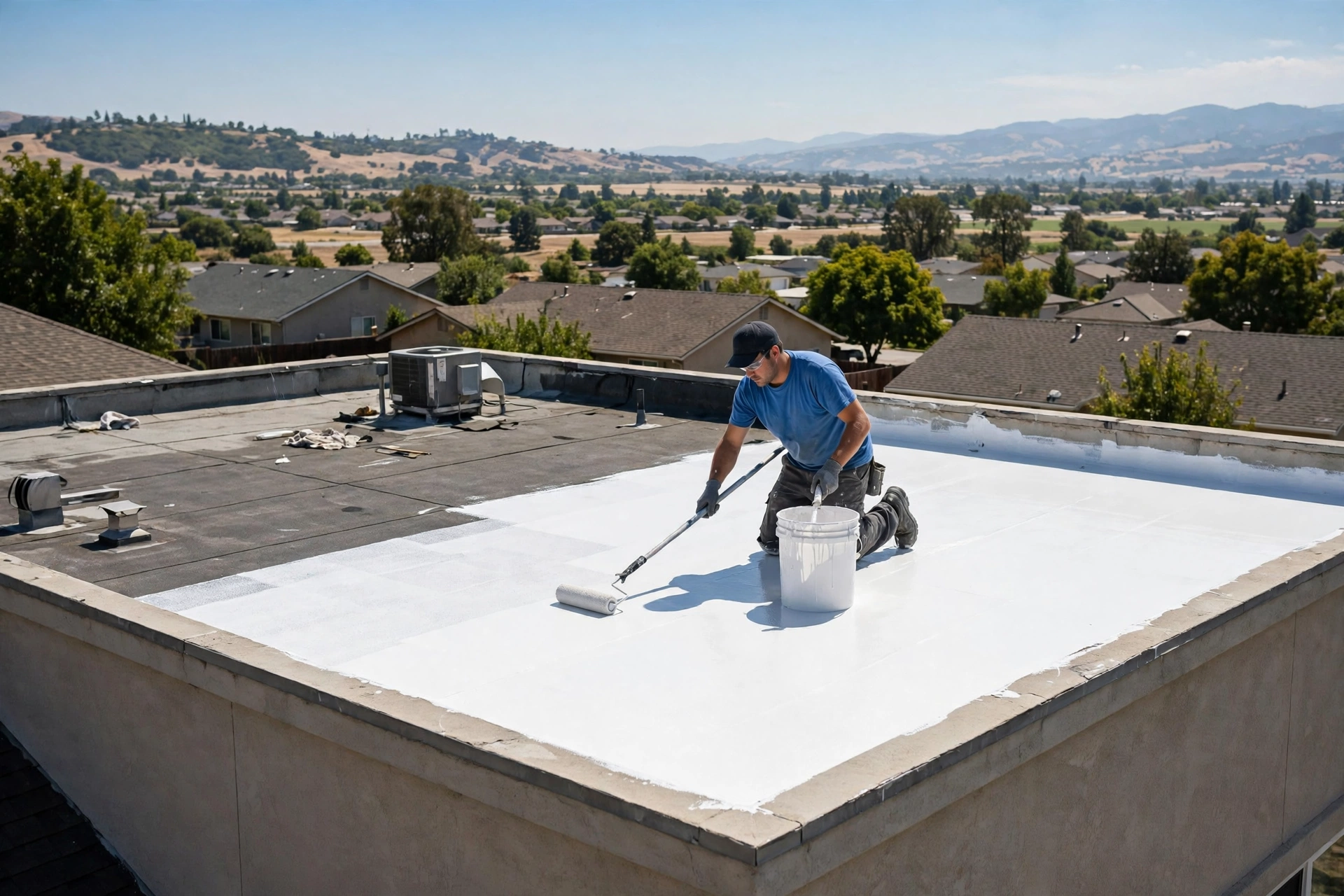
A flat roof is not really flat, and it is not forgiving. It holds water longer than a pitched roof, it takes the full force of summer sun, and its waterproof layer is the only thing between rain and the ceilings below. When that layer ages, cracks, or loses its reflective finish, leaks often appear far from the actual failure, and a small blister or seam split can grow into stained plaster, damp insulation, and rotted decking. A good flat roof coating does not replace a failed roof, but on a sound roof it adds a seamless, waterproof, sun-reflecting skin that can extend its life by years.
In plain terms, silicone coatings handle ponding water and sun best, acrylic coatings offer good reflectivity at a lower cost where drainage is sound, and polyurethane coatings suit roofs that take foot traffic or impact. The right choice depends less on marketing claims and more on three facts: whether water ponds on your roof, what the existing roof surface is made of, and how much sun and temperature movement it faces. Get those three facts wrong, and even a premium coating will peel, blister, or wear out early.
Why Flat Roofs Leak Differently From Pitched Roofs
On a pitched roof, gravity is your ally: water runs off quickly, and a small defect often stays local. On a flat or low-slope roof, water lingers. It finds seams, penetrations, and low spots, it stays long enough to work through a pinhole, and it spreads sideways through insulation and decking before it shows inside. That is why flat roof problems often present as a damp patch in the middle of a room, far from the entry point, and why simply painting over a stain inside never fixes the cause.
Sun adds a second, slower failure mode. Ultraviolet radiation breaks down many roofing materials, heat cycles expand and contract the surface daily, and a dark, uncoated roof can reach very high surface temperatures in summer. A reflective coating reduces that heat load, slows ultraviolet degradation, and can keep the rooms below cooler, but reflectivity alone does not waterproof a roof. A coating must do both jobs — seal water out and reflect sun — and it must stay flexible enough to move with the roof without cracking.
Silicone, Acrylic, and Polyurethane Flat Roof Coatings Compared Side by Side
Silicone coatings are the ponding-water specialists. They cure into a flexible, seamless membrane that remains stable under standing water and intense ultraviolet light, which makes them a strong choice for flat roofs with slow drainage or low spots that cannot easily be re-sloped. Their main limits are adhesion to some surfaces, which needs careful priming, and recoatability: once silicone is down, only silicone usually sticks to it reliably, so future repairs must use compatible products. Silicone also tends to attract dirt, which can dull its reflectivity over time unless it is cleaned.
Acrylic coatings are water-based, easier to apply and clean up, and generally less expensive. They reflect sunlight well and handle ultraviolet exposure, which makes them popular for sound roofs in sunny, dry climates. Their weakness is standing water: prolonged ponding can soften and degrade many acrylics, so they suit roofs that drain properly and do not hold water for days after rain. Polyurethane coatings sit in a different niche: they are tougher, more abrasion- and impact-resistant, and better for roofs that are walked on for maintenance, air-conditioning service, or occasional access. Some polyurethanes need a UV-stable topcoat, because the base coat alone can degrade in sun, so check whether the system you are buying is a complete, UV-stable system or a base coat that needs protection.
Matching a Flat Roof Coating to the Roof You Already Have
A coating is only as good as its bond to the surface below, and different existing roofs need different preparation. Single-ply membranes, modified bitumen, built-up asphalt, metal, and concrete each have their own primers and compatibility rules, and a coating that works beautifully on one can peel from another. Manufacturers publish compatibility tables for a reason: read the one for your exact roof type, not a generic claim that a product works on ‘most roofs’. Where compatibility is doubtful, a test patch, left through a rain and sun cycle, is cheap insurance.
Surface preparation is where most coating jobs succeed or fail. The roof must be cleaned of dirt, algae, loose granules, and old failed coatings, seams and blisters must be repaired, and wet insulation or rotted decking must be replaced rather than coated over. Coating over trapped moisture is a classic failure: the moisture turns to vapour in sun, blisters the new coating, and the blister then cracks and leaks. If you are unsure whether the roof deck is dry, a moisture survey or a professional inspection is worth the cost before you spend money on coating.
Ponding Water, Slope, and the Limits of Any Coating
Ponding water is the single most important fact to establish before choosing a coating. Walk the roof after rain, or ask your roofer to mark low spots, and note how long water remains. Water that drains within a day or two is normal for a low-slope roof; water that stands for several days, or that leaves silt rings and algae, is a drainage problem. A silicone coating can tolerate that condition better than acrylic, but no coating fixes a roof that was built without adequate fall or with blocked outlets.
Where ponding is severe, the honest solution is often to improve drainage first — clearing outlets, adding a tapered insulation system, or installing additional drains — and then coat. Tapered insulation is more expensive than a coating alone, but it changes the roof from a ponding roof to a draining roof, which protects not just the coating but the whole structure below. Treating a coating as a substitute for drainage is how homeowners pay twice: once for the coating, and again for the drainage work when the coating fails.
Applying a Flat Roof Coating So It Actually Lasts
Application looks simple — roller, brush, or spray — but thickness and weather windows decide the result. Coatings are specified at a dry film thickness, usually achieved in two coats, and a thin, patchy coat will not waterproof or reflect as promised, however good the product in the bucket. Measure coverage as you go, rather than guessing from the number of buckets used, and pay attention to details: seams, flashings, parapet junctions, and around vents and skylights need reinforcement fabric in many systems, because those are the places that move and crack first.
Weather matters during application and curing. Most coatings need a dry, reasonably warm surface, a rain-free window after application, and temperatures within the manufacturer’s range. Applying in damp, cold, or imminently wet conditions can trap moisture, prevent curing, and leave a soft film that washes or blisters. Read the data sheet for your exact product, including its rain-ready time and temperature limits, and do not let a tight schedule override those limits. A coating applied in the wrong weather is worse than a coating delayed by a week.
Flat Roof Coating Errors That Shorten a Coating’s Life
The most expensive coating error is coating a roof that should be replaced. If the deck is rotted, insulation is saturated over a large area, or the membrane has failed in many places, a coating will seal in damage and delay the inevitable replacement while the structure deteriorates unseen. A second common error is choosing on price alone: a cheap acrylic on a ponding roof, or a single thin coat where two are specified, saves money on day one and costs far more in early failure and interior damage.
- Do not coat over wet insulation, rotted decking, or unrepaired blisters and seam splits.
- Do not mix coating chemistries — especially silicone and non-silicone — without manufacturer approval.
- Do not skip reinforcement at seams, flashings, and penetrations where the system calls for it.
- Do not apply in rain, on a wet surface, or outside the product’s temperature range.
Maintaining a Coated Flat Roof After the First Year
A coated roof still needs inspection, ideally twice a year and after major storms. Walk the roof, or have a roofer do it, and look for ponding, dirt build-up, blisters, cracks at details, and debris blocking outlets. Clean the surface gently — dirt reduces reflectivity and can hide early cracks — and recoat worn areas with a compatible product before they become leaks. Keep a record of the coating product, colour, thickness, and application date, because a future roofer will need that information to choose a compatible recoat, especially if the original coating was silicone.
Expect recoating intervals to vary by product and climate rather than trusting a single headline lifespan. Acrylic systems in harsh sun may need attention sooner than a silicone system on a well-drained roof, and any roof with heavy foot traffic will wear faster at walkways. Budget for inspection and small repairs as routine maintenance, not as a sign of failure: a coating that is inspected and touched up lasts far longer than one that is ignored until it leaks.
Final Thoughts: A Flat Roof Coating That Protects Against Both Water and Sun
The best residential flat roof coating is the one that matches your roof’s drainage, surface, and sun exposure, applied at the right thickness in the right weather over a dry, repaired roof. Silicone earns its place on ponding roofs, acrylic earns its place on well-drained roofs in sunny climates, and polyurethane earns its place where the roof is walked on. Start by fixing drainage and damaged areas, choose by ponding and compatibility rather than price alone, and maintain the coating after it is down. That sequence — repair, drain, coat, maintain — is what turns a coating from a cosmetic paint job into genuine waterproofing and sun protection.
Residential Flat Roof Coating Waterproofing FAQs
Can a flat roof coating stop an active leak?
Sometimes, if the leak comes from a small, accessible defect in an otherwise sound roof, but a coating is not a reliable fix for a saturated or structurally failed roof. Find and repair the source, replace wet insulation and rotted decking, and only then coat the repaired, dry roof.
How long does a flat roof coating last?
It varies widely by product, thickness, climate, and maintenance, and manufacturers’ headline figures assume correct preparation and application. In practice, many systems need inspection and touch-ups within a few years and a full recoat well before the longest claimed lifespan, especially in harsh sun or ponding conditions.
Is a white reflective coating always better than a dark one?
For sun protection and cooling, a light, reflective coating generally performs better, but it must also waterproof well and suit your roof surface. A reflective coating that peels or ponds badly is worse than a darker, well-bonded system, so waterproofing and compatibility come first.
Can I coat a flat roof myself?
A confident DIYer can coat a small, sound, easily accessed roof if they follow the manufacturer’s preparation, thickness, and weather instructions exactly. Larger roofs, ponding roofs, roofs with penetrations and parapets, and any roof where the deck condition is unknown are better left to a roofing professional.
Will a coating work over an old bitumen roof?
Often yes, with the right primer and system, because many coatings are designed for modified bitumen and built-up asphalt. Check the manufacturer’s compatibility table for your exact bitumen type, clean and repair the surface, and test adhesion before committing to the whole roof.
Does a flat roof coating need a primer?
Many systems do, especially on single-ply membranes, metal, or previously coated surfaces. The primer improves adhesion and prevents chemical incompatibility, so skipping it to save time is a common cause of peeling. Follow the data sheet for your specific coating and substrate.